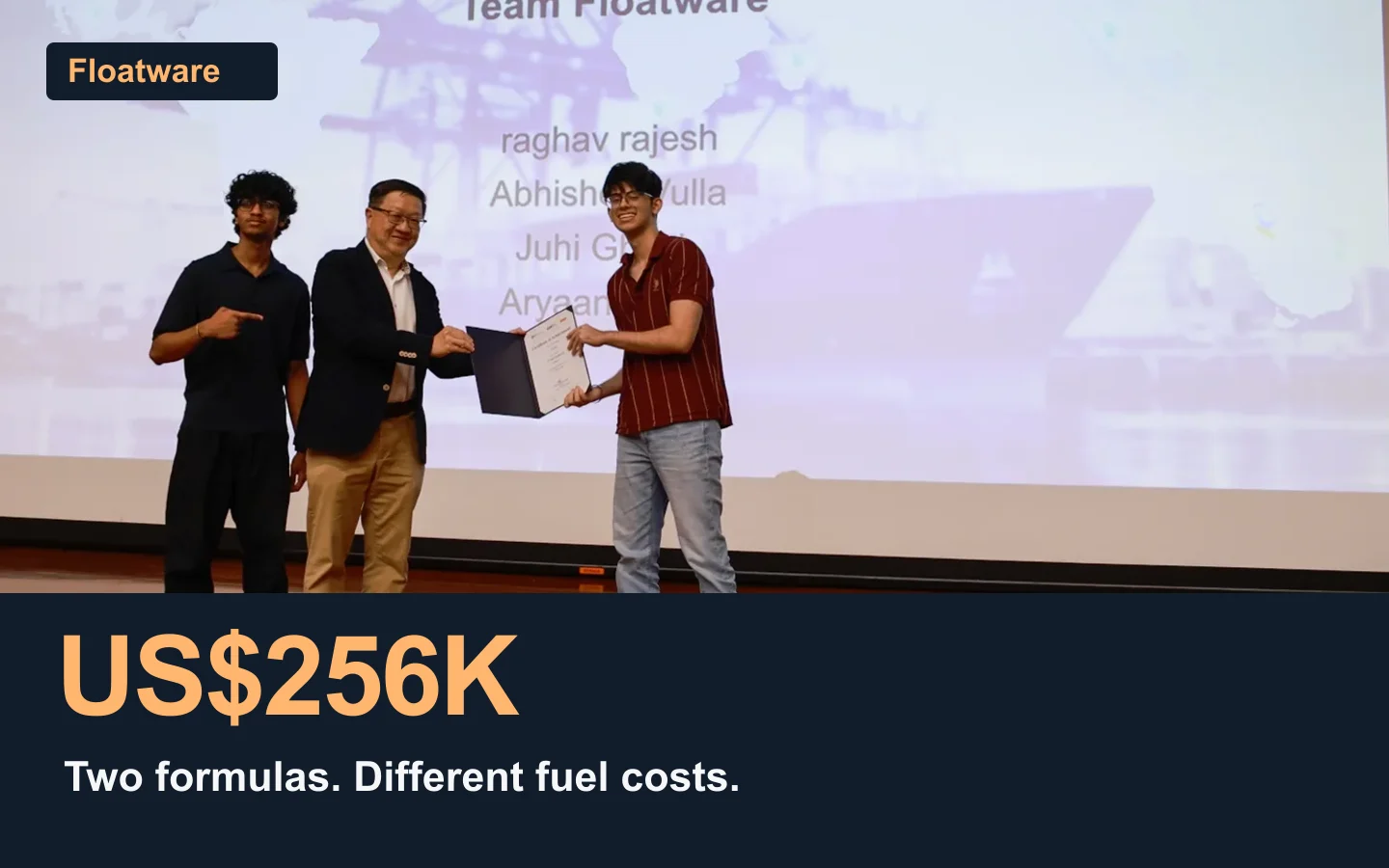
One document priced every engine using the main engine's fuel. The problem statement said to price each piece of machinery using its own fuel. That mattered because auxiliary engines and boilers burned distillate even on ships whose main engines used hydrogen or other fuels.
Checking the fuel calculation
I cleaned 13,000+ AIS records from 108 vessels and counted only real transit and manoeuvring time. Our model selected 22 ships to move 4.58 million tonnes of cargo for US$20.04 million.
We priced each engine's fuel separately, following the problem statement. Comparing that calculation with the single-price formula exposed the difference below. Hydrogen ships accounted for most of it.
| Ship fuel type | Difference |
|---|---|
| Hydrogen | $173,407 |
| Ethanol | $40,476 |
| Methanol | $19,827 |
| Ammonia | $7,829 |
| LNG | $6,979 |
| LPG (butane) | $4,505 |
| LPG (propane) | $3,152 |
| Total | $256,174 |
Checking the submission separately
We ran 16 independent checks covering the finance formulas, capacity, safety, fuel diversity and submission totals. The code and submission CSV matched, but the paper's cost table still used the old fuel calculation. The table needed regenerating. We also caught a UTF-8 encoding bug in the submission CSV.
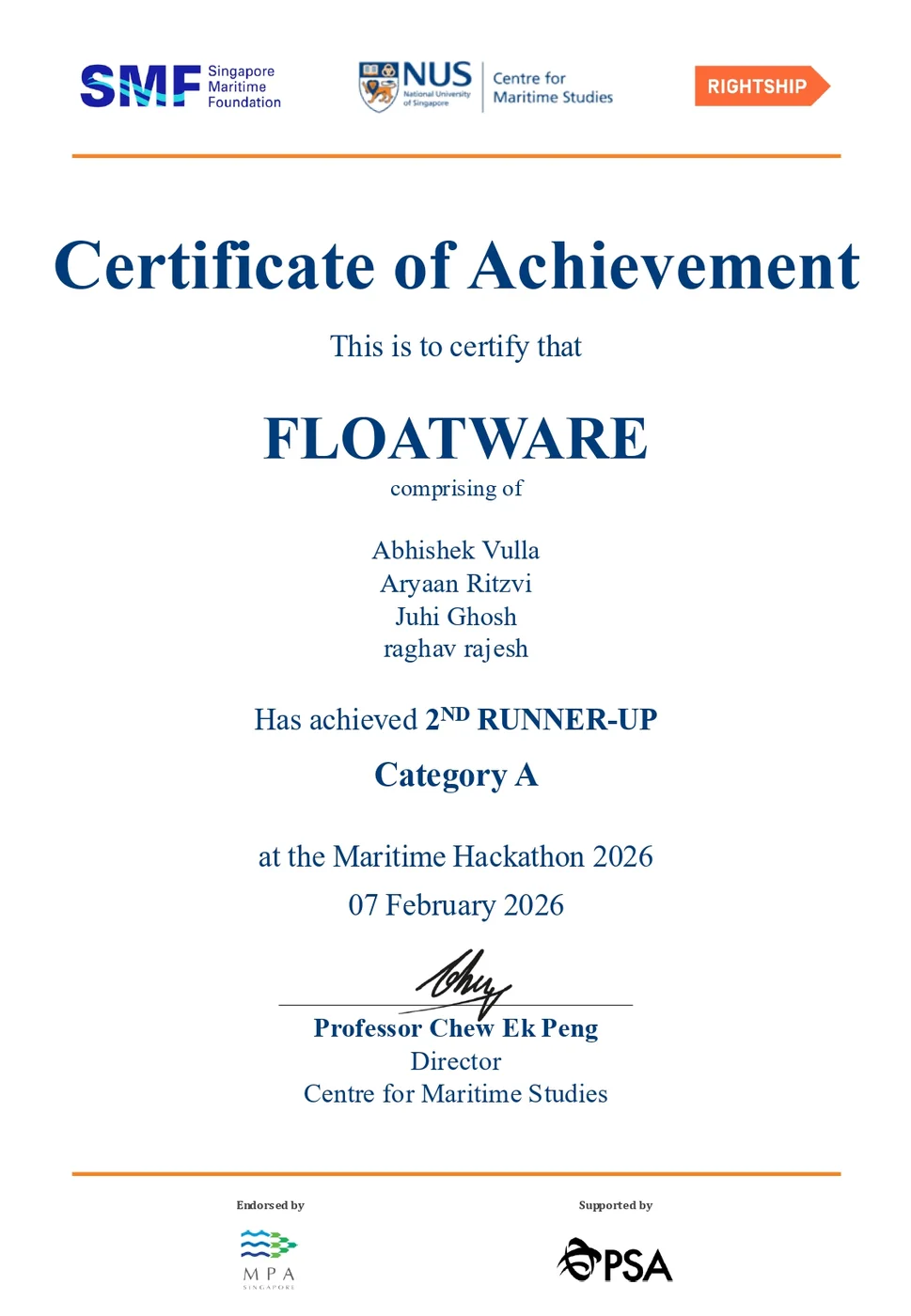
The final model found that vessel ownership accounted for 76.5% of total cost, far more than fuel. Raising the minimum safety score from 3 to 4 increased cost by 5.1%, but cut CO2 by 3.9%. The safer ships also ran cleaner fuels, so the safety rule changed the emissions result.