AI tutor for university LMSs
LearnLoop

An AI study layer inside SUTD's learning platform. It answers from approved course material and keeps the exact source slide beside every response.
- Piloted with 40 students
- 2 SUTD classes
- SUTD Baby Shark Fund
- S$2,000
- SUTD's first cybersecurity review
- Passed
Passed SUTD EduTech's first cybersecurity review after I moved student sign-in to SUTD, removed public signup and restricted the tutor's access to approved course material.
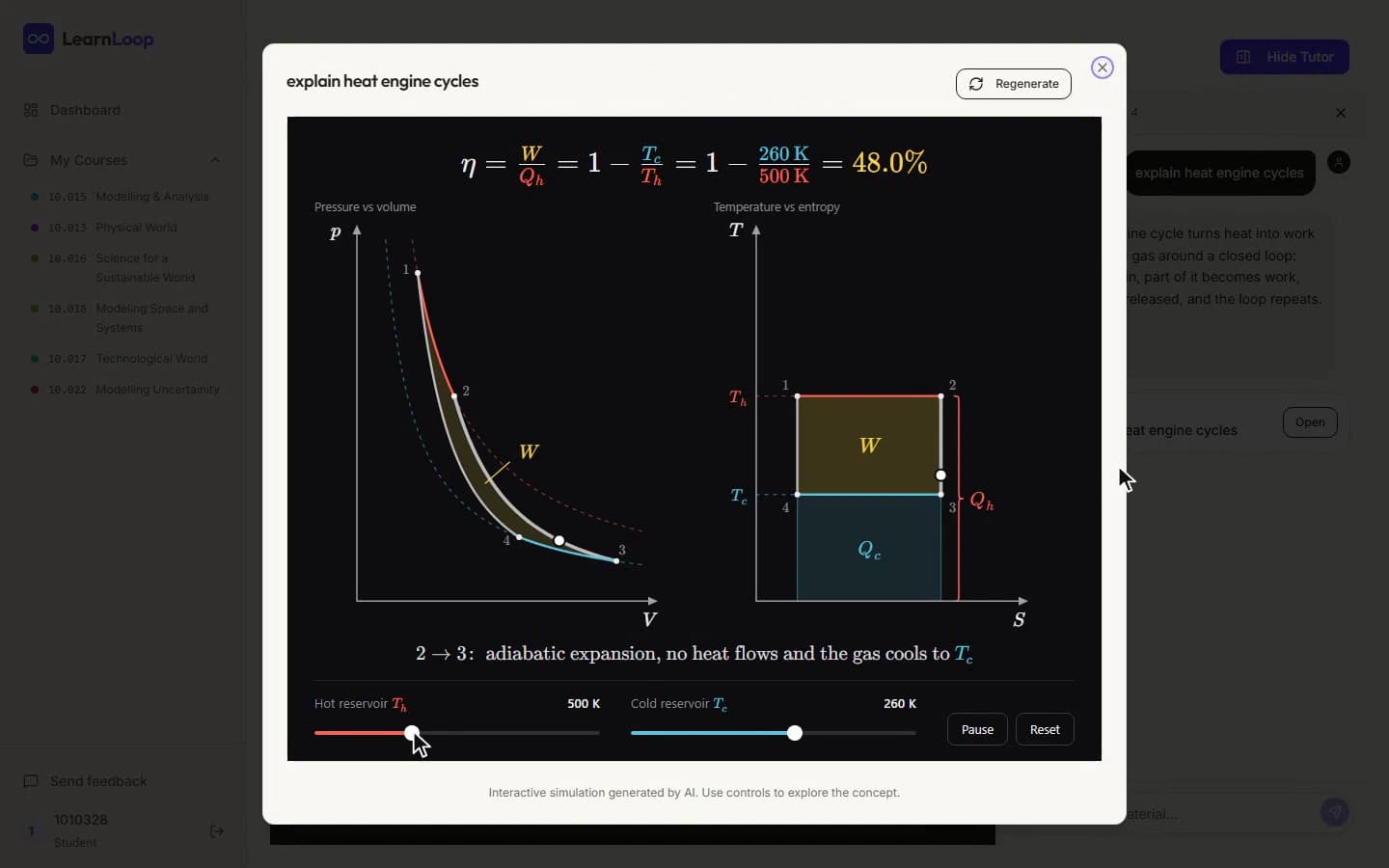
LearnLoop's tutor, feedback on handwritten homework and interactive lessons.
- Product demo: LearnLoop's tutor, feedback on handwritten homework and interactive lessons.
- SUTD newsletter: SUTD Design.AI featured the classroom pilot in its March 2026 newsletter.
- Tutor: The tutor keeps the answer and its source slide in the same view.
- Homework grader: Handwritten homework beside grading feedback and suggested topics to revise.
- Cohort analytics: Instructors can see the concepts a cohort is struggling with instead of reading isolated chat logs.
What it does
LearnLoop's tutor answers from approved course material and shows the source slide. I also built a homework grader that reads handwritten submissions, points out mistakes and links them back to the relevant lecture slide.
Students launch the tutor from SUTD's learning platform without creating another account. Under the hood, that meant LTI 1.3 with OIDC and signed JWTs, plus a three-legged OAuth sync for course content and announcements. RBAC, rate limits and per-user AI caps keep access and spending bounded.
The instructor view groups repeated mistakes across the cohort, so lecturers can see what needs reteaching without reading every student conversation.
Classroom pilots
LearnLoop was piloted with 40 students across two classrooms.
Moving login to SUTD
Students and instructors use SUTD's EASE login through LTI 1.3. I removed public signup and reduced Blackboard access to only the course material the tutor needed. The security review article explains those changes and the single-use login handoff.
Answers include citations to the retrieved slides. Search is restricted to the student's course so material from another class cannot be used to answer the question.