Co-founder · Apr 2026 to present
rankr
I co-founded rankr and work directly with clients on their search strategy and websites. I also build the tools we use to research and publish content.
- SEO and AI search
- 4 clients
- From Lullaflex's launch to a ChatGPT recommendation
- 2 months
- B&P Forum click-through rate · Aug to Sep 2026
- 0.8% → 2.3%
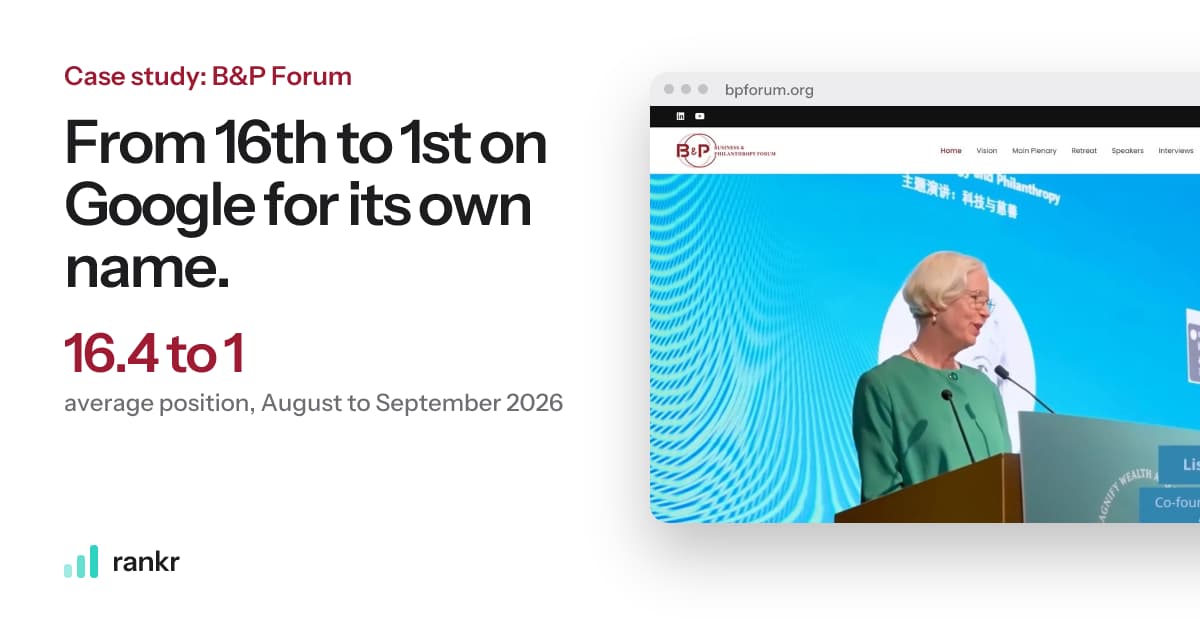
B&P Forum's average Google position for its own name improved from 16.4 to 1 between August and September 2026.
- B&P Forum case study: B&P Forum's average Google position for its own name improved from 16.4 to 1 between August and September 2026.
- ChatGPT citation: ChatGPT recommended Lullaflex two months after we launched its first website.
- Live client tool: Customers can arrange a bed and other furniture in Lullaflex's interactive room planner.
- Search Console walkthrough: Finding searches a client's page already appears for but doesn't mention.
- UCWS pitch: Top 20 from 800+ participants at UCWS Singapore, with US$10,000 in OpenAI credits awarded to the team.
Building for clients
rankr has four clients. My work runs from the first client call to building their site, writing and reviewing content, and checking the results in Search Console.
For Lullaflex, I built a mattress website from a new domain and a bedroom planner that lets visitors check furniture fit before buying. The product pages and size guides answer the questions buyers need to settle before choosing a mattress.
Fixing B&P Forum's duplicate site
Google was showing a test copy of B&P Forum alongside the real site. We blocked the copy and had Google remove it, rewrote titles and descriptions for 83 English pages, and built a blog from the forum's speaker interviews.
After the cleanup, click-through rate rose from 0.8% to 2.3% between August and September 2026. Clicks to the real site increased too. The client-results article has the Search Console captures and page-by-page breakdown.
How I decide what to build
I start with the client's Search Console data. If an existing page already appears for a useful query, I look at improving that page before adding another one. New content should answer questions the client's customers actually ask.
I built a pipeline that plans and drafts client pages using search demand data, the current top-10 results and Reddit threads. I review the drafts with the client before publishing.
Early funding
rankr received S$2,000 from SUTD's Baby Shark Fund and US$10,000 in OpenAI credits at UCWS Singapore.